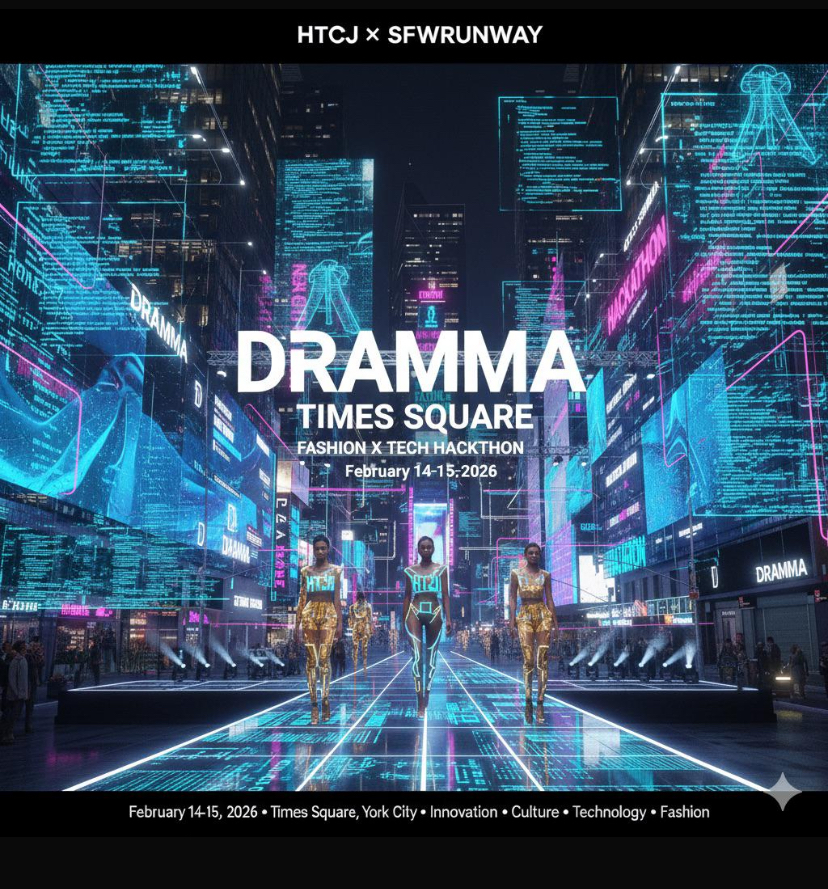
About the challenge Hack the Concrete Jungle (HTCJ) × SFWRUNWAY is a culture-driven innovation hackathon exploring how technology, fashion, commerce, and digital infrastructure intersect to shape the future of creative economies.
Hack the Concrete Jungle (HTCJ) × SFWRUNWAY is a culture-driven innovation hackathon exploring how technology, fashion, commerce, and digital infrastructure intersect to shape the future of creative economies.
Hosted during New York Fashion Week, this event brings together developers, designers, founders, and industry leaders to build real solutions for challenges facing emerging designers, creative brands, and fashion-tech innovators.
This is not a concept-only hackathon. Teams are expected to ship working prototypes that address real-world problems across fashion, media, sustainability, production, and monetization.
HTCJ is part of a global, always-on innovation ecosystem. While the hackathon culminates in an in-person event, selected teams may continue building, collaborating, and scaling beyond the event through the HTCJ platform and partner network.
operators, investors, and incubation resources.
Get Started
Ready to build at the intersection of fashion, technology, and culture? Follow these steps to participate:
1️⃣ RegisterSign up on this Devpost page to officially join the hackathon.
2️⃣ Form or Join a TeamBuild solo or collaborate with designers, developers, and creatives. Cross-disciplinary teams are encouraged.
3️⃣ Choose a TrackSelect one (or more) tracks that best align with what you want to build—fashion tech, AI, wearables, sustainability, creator monetization, or open innovation.
🧭 Tracks 1️⃣ Fashion Technology & Digital InnovationBuilding tools and platforms that modernize how fashion is designed, produced, and presented.
Examples: digital runways, virtual showrooms, design tools, fashion data platforms
2️⃣ Wearable Technology & Smart ProductsTechnology embedded into garments, accessories, or materials to enhance performance, interaction, or expression.
Examples: smart textiles, connected accessories, AR fashion, sensor-enabled wearables
3️⃣ AI for Fashion & Creative SystemsUsing artificial intelligence to support design, production, media, and decision-making in fashion.
Examples: AI-assisted design, trend forecasting, content generation, inventory optimization
4️⃣ Sustainability, Materials & Supply ChainRethinking how fashion is made, sourced, and distributed with transparency and responsibility.
Examples: circular fashion systems, traceability tools, sustainable materials, waste reduction platforms
5️⃣ Creator Economy & Designer MonetizationHelping designers and creatives own, protect, and monetize their work.
Examples: smart royalties, IP protection, direct-to-fan platforms, community commerce tools
6️⃣ Retail, Commerce & Customer ExperienceInnovating how fashion reaches consumers across digital and physical channels.
Examples: e-commerce tools, personalization, payments, in-store technology, omnichannel experiences
7️⃣ Web3, Digital Identity & OwnershipExploring decentralized models for ownership, identity, and value in fashion and creative industries.
Examples: tokenized fashion, on-chain IP, digital identity for designers, community governance
8️⃣ Open Innovation (Wildcard)Bold, experimental ideas that don’t fit neatly into one category but push the future of fashion, culture, and technology.
Examples: cross-disciplinary projects, speculative infrastructure, new cultural systems
4️⃣ Build Your Project
Create a working prototype that addresses a real challenge in fashion, media, sustainability, or creative infrastructure.
5️⃣ Submit on DevpostUpload your project before the deadline with:
-
Demo or video
-
Description of the problem & solution
-
Technical details and team info
Selected teams may demo during the event and continue developing post-hackathon inside the HTCJ ecosystem.
Continue Beyond the EventHTCJ is an always-on platform. All participants are encouraged to join the HTCJ Builder Loop to keep collaborating and access future opportunities:
👉 https://app.ourloop.life/invite/vcVLG4U2?type=loopToken
Build it. Ship it. Keep going.
Requirements
What to Build
Build a working, functional prototype that addresses a real challenge at the intersection of fashion, technology, culture, and digital infrastructure.
Your project should empower emerging designers, creative brands, and fashion-tech innovators to operate more efficiently, sustainably, and profitably, while reflecting how fashion is experienced, produced, and monetized today.
Submissions must:
-
Align with one or more official tracks listed below
-
Demonstrate clear real-world application
-
Go beyond concept or speculation — working code is required
OFFICIAL TRACKS
Teams may build in one or more of the following areas. This list is intentionally broad to encourage creativity.
1. Fashion Technology & Digital Runways
Projects that reimagine how fashion is presented and experienced.
-
Virtual or hybrid runway experiences
-
Digital fashion presentation tools
-
AR/VR fashion showcases
-
New formats for audience engagement during fashion events
2. Creator & Designer Monetization
Tools that help designers and creators earn directly from their work.
-
Direct-to-fan revenue tools
-
Smart royalty systems
-
IP protection and licensing platforms
-
Subscription, tipping, or community-driven commerce
3. AI for Fashion & Media
Projects applying AI to design, content, and operations.
-
AI-assisted design, styling, or trend analysis
-
Content generation for fashion marketing and media
-
Production optimization using AI
-
Demand forecasting or inventory planning tools
4. Sustainability & Supply Chain Innovation
Solutions focused on transparency, ethics, and sustainability.
-
Traceability tools for materials and production
-
Circular fashion and resale infrastructure
-
Carbon tracking or sustainability analytics
-
Ethical sourcing and transparency platforms
5. Web3, Digital Identity & Ownership
Projects exploring ownership and decentralized fashion ecosystems.
-
Tokenized fashion or digital assets
-
On-chain IP or royalty management
-
Decentralized communities for creators
-
Digital identity for designers and brands
6. Infrastructure for Emerging Designers
Platforms and tools that reduce friction for early-stage brands.
-
Production, logistics, or retail-access tools
-
Platforms connecting designers with manufacturers, retailers, or investors
-
Financial, legal, or operational infrastructure for emerging brands
7. Partner Track: ElevenLabs — AI Voice & Fashion Storytelling (Optional)
Projects that integrate ElevenLabs’ AI voice technology to enhance fashion storytelling and runway experiences.
Example ideas include:
-
AI-generated runway narration or show voiceovers
-
Interactive audio storytelling for collections or brand launches
-
Multilingual voice experiences for global fashion audiences
-
Voice-powered avatars, digital showrooms, or virtual runways
Teams that meaningfully use ElevenLabs are eligible for the Best Project Built with ElevenLabs award.
8. Partner Track: Omniverse City — Immersive Worlds & Digital Fashion Environments (Optional)
Projects that leverage Omniverse City to build immersive, spatial, and interactive environments for fashion, culture, and creative expression.
Learn more: https://theomniverse.city
Example ideas include:
-
Virtual fashion districts or digital cities for designers and brands
-
Immersive showrooms or world-based runway experiences
-
Spatial commerce and interactive brand environments
-
Community-driven digital spaces for fashion, art, and culture
Teams building in this track should focus on how place, environment, and interaction create new value for fashion ecosystems beyond traditional platforms.
TECHNICAL EXPECTATIONS
-
Projects must be functional, not just conceptual
-
A live demo, MVP, or short demo video is required
-
Any tech stack is allowed (web, mobile, AI, Web3, hardware, etc.)
-
Sponsor tools and APIs may be used where available
WHAT SUCCESS LOOKS LIKE
Strong submissions will:
-
Solve a real problem faced by designers or creative brands
-
Demonstrate practical usability, not speculative ideas
-
Show strong technical execution and thoughtful design
-
Indicate potential for post-hackathon growth or real-world adoption
Bottom Line
Build something real that someone in fashion could actually use.
If your project helps a designer launch faster, tell a better story, reach a global audience, earn more, or operate more sustainably — you’re building in the right direction.
What to Submit
All teams must submit their project through Devpost before the submission deadline. Each submission should include the following:
1. Project Overview-
Project name
-
One-sentence description of what you built
-
The track(s) your project aligns with
-
The problem you are addressing
-
Who it impacts (designers, creators, brands, consumers, etc.)
-
How your solution works and why it matters
-
A working demo of your project
-
Live URL, web app, mobile app, or interactive prototype
-
OR a short demo video (2–3 minutes max) showing the product in action
-
-
Tech stack used (frameworks, APIs, AI models, blockchain, hardware, etc.)
-
How the system is architected at a high level
-
Any sponsor tools or platforms used (if applicable)
-
Screenshots of the product
-
Optional images, diagrams, or short clips to explain functionality
-
Names and roles of all team members
-
Links to GitHub, LinkedIn, or personal portfolios (optional)
-
Link to a public or private GitHub repository
-
Clear instructions for running or testing the project (if applicable)
-
Roadmap or next steps post-hackathon
-
Business model or go-to-market approach
-
Sustainability, ethics, or long-term impact considerations
-
Projects must be built during the hackathon timeframe
-
Submissions that are incomplete or purely conceptual may be disqualified
-
Teams retain ownership of their IP
Prizes
HTCJ Incubation Access
Top teams will be invited into Hack the Concrete Jungle Phase 2 (Incubate), which includes:
• Venture support and strategic guidance
• Product refinement and go-to-market planning
• Access to HTCJ’s operator, mentor, and advisor network
Runway & Demo Exposure
Selected teams will receive:
• Live demo or showcase opportunities at future HTCJ events
• Visibility across HTCJ’s media, partners, and ecosystem platforms
Investor & Partner Introductions
High-potential projects may receive:
• Curated introductions to investors, brands, and ecosystem partners
• Access to Deal Flow Rooms within the HTCJ platform
Devpost Achievements
Submitting to this hackathon could earn you:
Judges

Jr horsting
Funadclic

Spectra
Non Technical Judge

Theresa Kennedy
tbhf.org

Andy Austin
http://adsora.com/
Judging Criteria
-
Innovation & Originality
How creative and original is the solution? Does it introduce a new idea, approach, or application within fashion, technology, or culture? -
Technical Execution
Quality of the build, functionality, and technical implementation. Does the solution work as intended and demonstrate strong engineering or design skills? -
Track Alignment
How well does the project align with its chosen track and the overall theme of HTCJ × SFWRUNWAY? -
Real-World Impact
Does the solution address a real problem in fashion, culture, commerce, or urban systems? Is there clear potential for real-world use? -
Design & User Experience
Visual design, usability, storytelling, and presentation quality. Is the product intuitive, compelling, and well-executed? -
Scalability & Business Potential
Potential for growth beyond the hackathon. Could this become a startup, brand, or platform with users, customers, or partners?
Questions? Email the hackathon manager
Tell your friends
This site is protected by reCAPTCHA and the Google Privacy Policy and Terms of Service apply.